.png)


 英文
英文

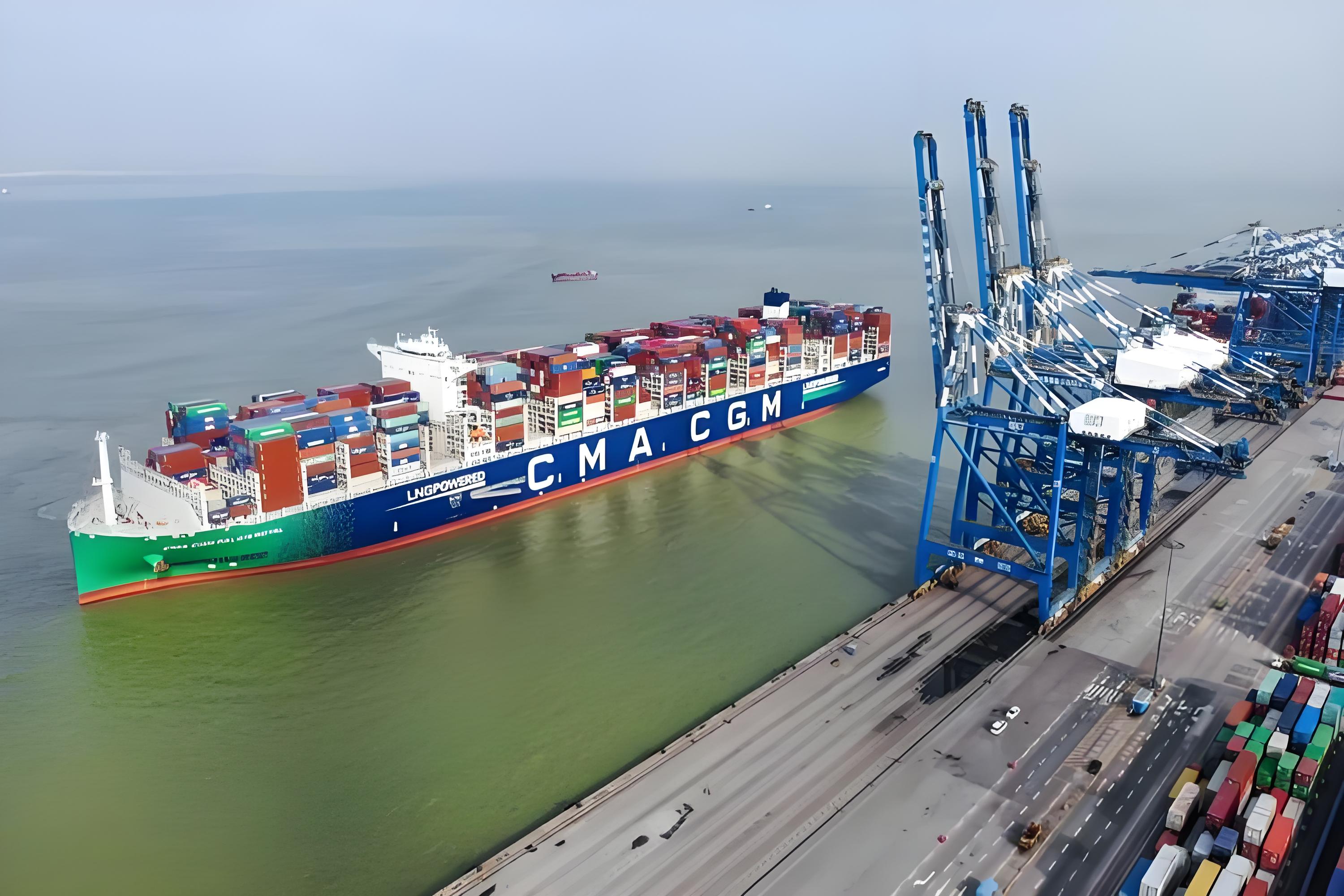
Recently, CMA CGM and Hapag-Lloyd, two major liner companies, simultaneously announced the suspension of new bookings to and from Cuba, drawing market attention to Caribbean routes, sanctions compliance, and global supply chain stability. On the surface, this appears to be an operational adjustment by the two carriers in a specific market. On a deeper level, however, it reflects a broader shift in international shipping from "capacity competition" to what is now being called "compliance competition."
The core reason for the suspension is not a decline in cargo volume, port congestion, or freight rate issues, but rather the potential compliance risks arising from the latest U.S. sanctions framework. For global liner companies, the greatest challenge today is no longer simply whether a vessel can call at a port, but whether any sanctioned entity, sensitive fund flow, or high-risk associated party exists within the entire transaction chain.
What is particularly noteworthy is a clear shift in the logic behind these U.S. sanctions. In the past, restrictions focused more on U.S. companies or the U.S. dollar clearing system. Now, the risk is spilling over to non-U.S. companies, foreign financial institutions, and the global logistics chain. In other words, even a non-U.S. company may face significant risk exposure if it has business connections with restricted entities in a relevant transaction. This is the key reason why CMA CGM and Hapag-Lloyd have chosen to "suspend first and assess later."
For liner companies, once sanctions risk escalates, the most pragmatic option is often not to continue accepting cargo and reviewing each shipment individually, but to directly impose a "STOP BOOKING," and then re-examine the agency network, terminal partners, payment and receipt channels, ultimate consignees, and the related supply chain relationships. In the current environment, a problem with a single shipment can trigger a chain reaction affecting the entire route, financial settlements, and even the insurance framework. The unique characteristics of the Cuban market further amplify this risk.
A key focus of market attention is GAESA, the large Cuban commercial conglomerate. Because its operations span ports, retail, hotels, finance, logistics, and other sectors, it is extremely difficult for external shipping companies to thoroughly clarify whether any business links exist within a short timeframe. For international liner companies, this kind of "uncertainty" is itself the greatest compliance risk.
In terms of market impact, although Cuba is not a core market on the world's main shipping routes, it is highly dependent on imports. Once major liner companies suspend bookings, the real impact is not just reduced capacity but a decline in the stability of the entire import supply chain. Current market reports indicate that this suspension could affect a considerable proportion of Cuba's seaborne cargo volume. Shipments originating from China are believed to be particularly affected, with some machinery, electronics, building materials, food, daily necessities, and other essential goods likely facing more transshipment routes, unstable schedules, higher costs, and longer delivery lead times.
For Chinese exporters, the more significant point to note is not the Cuban market itself but the changing global shipping environment. In recent years, similar situations have repeatedly emerged in markets such as Russia, Iran, Venezuela, and the Red Sea. Now, this impact is further extending into ordinary container shipping. This means that the uncertainty in international logistics is no longer limited to wars, port congestion, or freight rate fluctuations, but is increasingly influenced by geopolitical risks, financial sanctions, compliance scrutiny, and supply chain transparency.
To some extent, the global shipping industry is entering a new phase of "compliance-driven operations." Whether a route can operate stably in the future will depend not only on cargo volume and profit but also on whether banks are willing to settle payments, insurers are willing to underwrite, the agency network is transparent, and whether trading partners involve sensitive entities. For shippers and freight forwarders, destination country policy changes, customer backgrounds, payment routes, and even the structure of the ultimate consignee can all become critical factors determining whether goods can be shipped smoothly.