.png)


 英文
英文

The current container shipping market shows obvious freight rate divergence. While freight rates for standard containers fluctuate with route supply and demand and vessel capacity adjustments, the pricing logic for OOG (Out-of-Gauge) oversized engineering cargoes is completely independent of ordinary containers. For engineering machinery, generator sets, pressure vessels, complete production lines and other oversized cargoes, logistics costs can no longer be estimated simply “by container”. Dimensions, weight, lifting conditions and lashing plans will all reshape the overall logistics budget. Many engineering enterprises adopt standard container freight rates for cost estimation at the project bidding stage, only to discover numerous hidden fees after booking, which severely squeeze project profits. Against the backdrop of divergent freight rates, the cost challenges for exporting oversized engineering cargoes are reflected in five major dimensions: special equipment and vessel space, end-to-end operations, surcharges, project lead time and risk costs.
I. Scarce Special Container Types and Vessel Space Push Up Base Ocean Freight Premiums
Ordinary dry containers have sufficient supply with relatively transparent and market-driven freight rates. By contrast, oversized cargoes require flat racks or open-top containers; for some ultra-large equipment, breakbulk vessels are even needed. Special containers have limited stock and slow turnover, and carriers incur high repositioning costs to move special containers. Once OOG cargo exceeds height or width limits, it occupies multiple standard slots on the vessel deck, and adjacent slots cannot be stacked with other cargo. Carriers will charge OOG surcharges for the lost vessel capacity. On the same route, ocean freight for flat racks often reaches 1.5 to 3 times that of standard containers. Meanwhile, container shipping rates vary widely across routes. Special container space for less popular destination ports and feeder ports remains tight, with highly volatile quotations. Even when standard container rates fall, rates for oversized cargo stay resilient. A common mistake made by enterprises is comparing only base ocean freight while ignoring container repositioning fees and OOG surcharges. During peak seasons or when space is tight, carriers prioritize space for general cargo. Booking for oversized cargo will be delayed, and prices may even be raised temporarily, further driving up project costs.
II. Special Operations at Origin and Destination: Lifting, Overland Transport and Lashing Incur Substantial Fixed Expenses
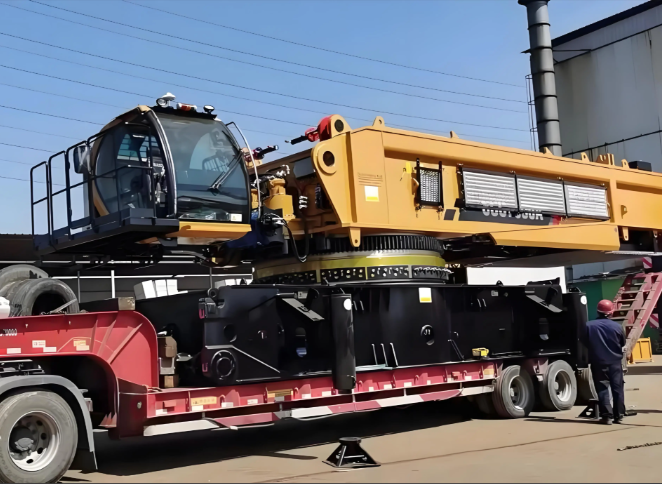
For oversized cargo, major costs often lie not in ocean freight, but in special handling fees at both ends of the shipment. First, overland oversized transport from factories to the port of loading. Heavy equipment requires low-bed trailers or hydraulic modular trailers. Oversized permits must be obtained along transit routes, and escort vehicles are required on some road sections. Scheduling special vehicles, arranging escorts and completing approvals all generate extra costs far higher than ordinary trucking. Second, heavy lifting operations at ports. Oversized cargo needs large port quay cranes for loading and unloading. Terminals require advance crane reservations and dedicated operation windows. Heavy-lift charges, special storage fees and overtime operation fees are billed separately. If port cranes are fully booked, additional waiting and storage fees will accrue. Third, lashing and inspection fees. Cargo on flat racks and open-top containers must be professionally lashed in compliance with maritime regulations using chains, timber dunnage and stoppers. Third-party surveyors are required to issue lashing certificates to satisfy carrier safety reviews. Simple self-made reinforcement at factories will most likely be rejected and reworked during terminal inspections, incurring extra material, labour and detention charges. Such lashing and survey fees are fixed costs unique to oversized cargo transport and rarely apply to general container shipments.
III. Numerous Hidden End-to-End Surcharges and Low Quotation Transparency Lead to Budget Overruns
Fee items for standard container shipping are relatively standardized, yet oversized project logistics comes with a long list of surcharges. Many freight forwarders only quote base ocean freight and settle many additional charges after shipment, which is the primary cause of project cost overruns. In addition to basic OOG surcharges and heavy-lift surcharges, fees include bunker adjustment factors, special port handling fees, heavy unloading fees at destination ports, overland oversized permit fees at destination, detention and demurrage, cargo insurance and third-party survey fees. If lifting equipment is inadequate at some overseas ports, floating cranes must be rented at considerable cost. Operation standards for oversized cargo differ greatly across countries and ports. For example, oversized cargo can only travel on roads in some European and American countries at night. Multi-state road permits are required, and combined costs for permits and escort fleets may even exceed ocean freight for the sea leg. Engineering projects have long cycles, and there may be months between bidding and actual shipment. Surcharges shift with market conditions, so static quotations tend to have large funding gaps.
IV. Uncertain Project Timelines Bring Time and Capital Costs
Project logistics for engineering cargo is closely tied to milestones of overseas infrastructure projects. Schedule delays directly trigger liquidated damages. The whole process for oversized cargo — preliminary engineering assessment, drawing review, port lifting evaluation, space booking, inland transport and terminal handling — requires far longer lead time than general cargo. Inadequate pre-assessment of cargo dimensions, weight and port handling capacity may force revisions to logistics plans. For instance, miscalculated equipment dimensions may render the original flat rack plan unworkable, requiring a last-minute switch to breakbulk vessels, which raises costs and postpones vessel schedules. Oversized equipment carries high value, and detention and demurrage accrue daily. Vessel delays or terminal congestion lead to ongoing capital occupation, warehousing fees and penalties that erode project margins. Amid volatile container shipping routes and unreliable vessel schedules, time cost has become a non-negligible hidden expense for exporting oversized cargo.
V. Insurance and Emergency Costs Arising from Cargo Safety Risks
Single oversized engineering equipment can be worth millions or even tens of millions of RMB. Collision or shifting during lifting and sea transport may lead to massive losses. Ordinary cargo insurance cannot cover the unique risks of OOG shipments, so separate project cargo insurance is required at higher premium rates than general cargo. Moreover, oversized transport requires advance risk assessment and customized lifting, stowage and emergency response plans. Poorly designed logistics plans may result in cargo damage during transit. Beyond the value of damaged goods, incidents can halt overseas construction projects and trigger consequential losses. Many exporters underestimate risk protection budgets. Once an accident occurs, losses can far exceed logistics freight itself.
Conclusion: Oversized Cargo Exports Require Project-Based Full-Service Logistics Providers
In a container shipping market with diverging freight trends, oversized engineering cargo cannot be evaluated using the same price-comparison mindset as general containers, by merely benchmarking ocean freight. Comprehensive planning covering logistics design, space reservation, full cost breakdown and risk control is essential to manage total logistics expenditure.
SeaGiant International Logistics has focused on oversized international logistics for over two decades. As a NVOCC registered with the Ministry of Transport, it specializes in project shipments for engineering machinery, complete industrial equipment and ship spare parts. Thanks to long-term stable partnerships with major carriers, SeaGiant can secure priority booking for flat racks, open-top containers and breakbulk vessel space.
SeaGiant delivers one-stop full-chain project logistics services, covering pre-project assessment, cargo documentation review, lifting and lashing design, domestic oversize trucking, export customs clearance, destination customs clearance, heavy lifting and overland oversized transport at destination. At the quotation stage, all cost items including lashing, surveys, lifting and inland permits are fully itemized and incorporated upfront to avoid unexpected charges later. The company maintains an experienced on-site oversized cargo operation team with standardized stowage and lashing procedures. It tracks shipment milestones in real time and updates vessel schedules and operation progress continuously to minimize cargo damage and schedule risks.
Faced with the volatile global shipping market, engineering enterprises can precisely calculate costs at the bidding stage and ensure smooth delivery of overseas infrastructure projects by partnering with a professional oversized project logistics provider and planning logistics solutions in advance.