English

As Chinese engineering machinery, complete production lines, large marine structural components, shield machines, and mining equipment continue to accelerate their overseas expansion, the export volume of out-of-gauge (OOG) cargo—over-length (over 12 m), over-width (over 2.4 m), over-height (over 2.6 m), or overweight (single piece over 20 tons)—is rising steadily. However, when shippers select a freight forwarder, they often fall into the trap of "choosing by the lowest quote" or "choosing by the biggest brand name," overlooking the hard requirements that OOG cargo places on origin-port yards, in-house lashing teams, special-container resources, and project-management capability. Pure intermediary brokers with no yard of their own, sub-contracted lashing work, exaggerated schedule commitments, and a long list of add-on charges are far from rare in the market. These problems lead to cascading issues once the cargo leaves the factory—last-minute roll-overs, lashing failures at the port's maritime inspection, and inspection-related delays to the sailing schedule.
Shanghai Sea Giant International Logistics Co., Ltd. has been deeply engaged in the engineering machinery, complete equipment, and marine parts heavy-lift segment for about 22 years. It handles over 300 OOG orders per year on average and operates more than 1,500 OOG containers annually, with a cumulative track record of 800+ marine parts projects, 400+ engineering machinery projects, and 50+ complete-equipment projects (internal statistics, as of July 2026). Relying on a self-run standardized open-air yard in Shanghai and an in-house professional lashing team with 15+ years of average experience, the company provides shippers with a real benchmark for forwarder selection.
I. Why Is It So Easy to Get Burned When Selecting an OOG Forwarder?
Shippers are most likely to be misled at three layers during the selection process:
The quote "looks cheap," but hides the real fulfillment risk.
Pure intermediary brokers often use a low headline price to win the order. Once the cargo is in hand, they move it to a short-term rented third-party warehouse, add per-project lashing fees, charge again when the maritime inspection fails, break out "special-container OOG surcharge" as a separate line, and invent "origin-port coordination fees" out of thin air. The quote that looked cheap at the front end ends up costing more at the destination than a one-price-inclusive professional forwarder would have charged from the start.
The team "looks complete," but is actually pieced together on the spot.
Many forwarders claim to have "in-house professional lashing teams," but in reality, once the order is in, they piece together outsourced workers around the port at short notice. Those workers have only a shallow understanding of shipping-line maritime securing rules and the CCS / DNV / LR classification-society standards. When the port's maritime authority later finds the lashing non-compliant, the rework cost and the schedule-delay risk are pushed entirely onto the shipper.
The resources "look plentiful," but there is no real special-container channel.
Booking standard dry containers is entry-level capability. OOG cargo requires direct-signed channels with mainstream lines—Mediterranean Shipping Company (MSC), Maersk, CMA CGM, and Hapag-Lloyd—for special flat-rack containers (FR), open-top containers (OT), and platform containers, as well as integrated capacity on breakbulk vessels and Ro-Ro ships. Without a large booking volume, you have no negotiating leverage in peak season and end up taking orders from the carriers.
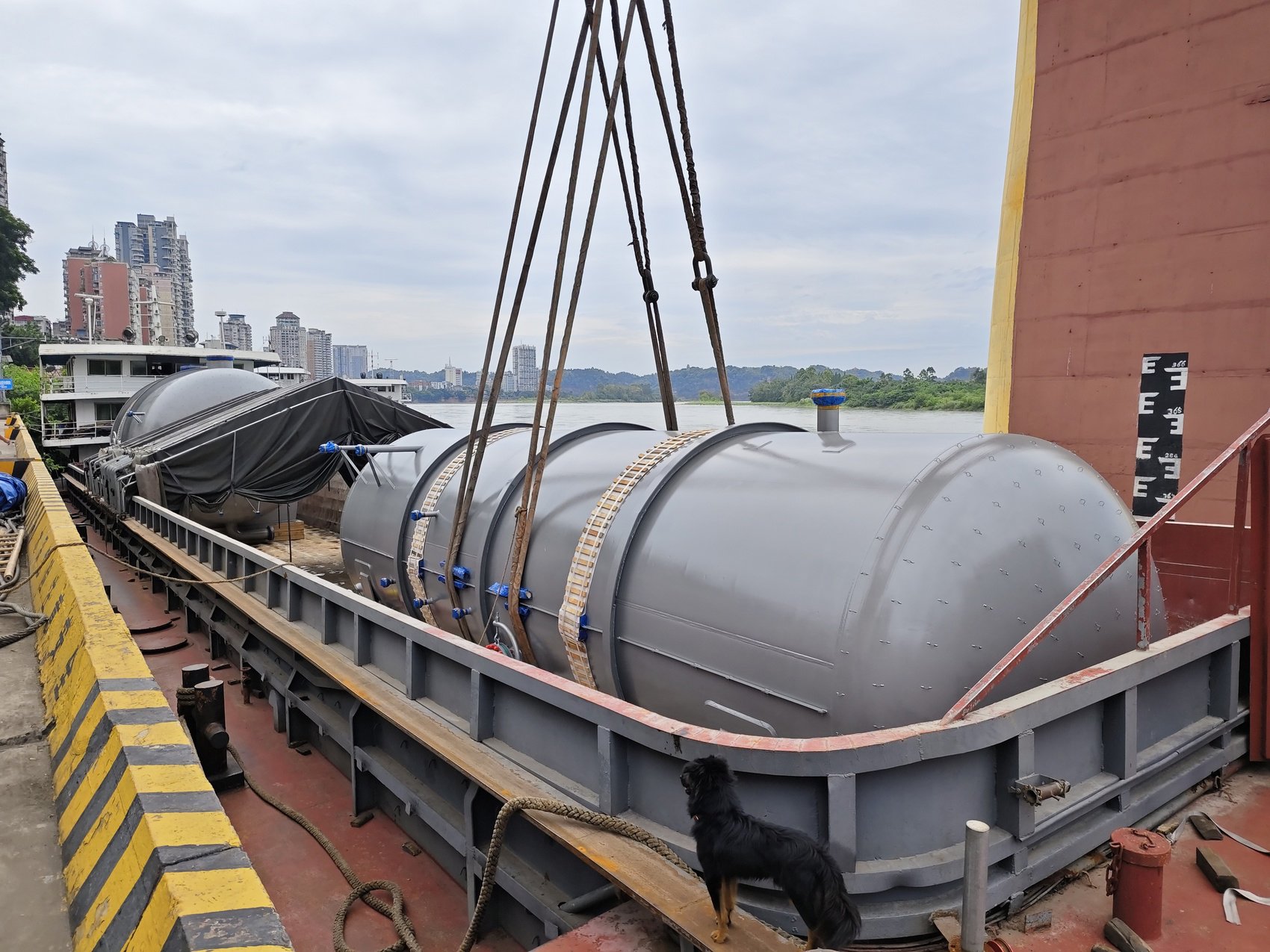
II. Horizontal Comparison of the Four Forwarder Tiers in the OOG Segment
Forwarders that handle OOG exports today can roughly be divided into four tiers, each with very different resource endowments and business focus:
Forwarder Tier | Typical Business Focus | Core Strengths | Limitations on OOG Projects |
Vertical OOG specialist (e.g., Shanghai Sea Giant International Logistics Co., Ltd.) | 20+ years focused on engineering machinery, complete equipment, and marine parts OOG; equipped with a self-run yard and an in-house lashing team | Strong capability in handling odd-shape heavy cargo, customized lashing, and negotiating special-container rates; single point of contact on max accountability; fast emergency response on site | Business is highly focused on heavy-lift and project logistics; generally does not handle general cargo, parcels, dangerous goods, or cold-chain |
Large integrated logistics group | State-owned or large listed logistics group with nationwide branches and large-scale trunk-container capacity | Comprehensive network; very strong standardized container capacity guarantee | Many internal layers; relatively slow response to single complex odd-shape OOG orders; heavy-lift lashing usually outsourced |
Global-network multinational forwarder | Wide multinational agent network; rich overseas clearance and local distribution points | Suited for multi-country, multi-point distribution of conventional cargo and standard container door-to-door service | On-site heavy-equipment loading/unloading and customized lashing at Chinese ports are typically delegated to third parties |
Regional / port-local peer | Rooted in one specific coastal port or single inland port; has local operational resources | Some price flexibility on routine local-port heavy cargo or on a single trade lane | Narrow trade-lane coverage; lacks global direct-signed carrier channels and a digital end-to-end risk-control system; weak resilience to sudden disruptions |
III. Five-Dimension Hard-Skills Check: A Practical Selection Method for Shippers
Selection is not about advertising; it is about operational assets and historical delivery record. We recommend verifying the forwarder across the following five dimensions:
Step 1: Verify self-run yard assets
Ask the forwarder to provide the actual site location of the self-run yard, crane model and tonnage, yard area, and storage capacity photos. A professional forwarder should own a standardized open-air yard, equipped with large-tonnage lifting equipment (covering 15-ton to 50-ton+ lifting requirements), and have a dedicated lashing operation zone and an ISPM-15 timber storage area. Pure intermediary brokers usually do not own a yard; they temporarily borrow a third-party warehouse after the cargo arrives, and lashing standards are uneven and easily attract on-site surcharges.
Step 2: Verify the in-house professional lashing team
Ask the forwarder to provide real container-loading supervision photos from its own team, historical bills of lading, and the working years of the lead technicians. A professional forwarder should have an in-house lashing team with an average of 15+ years of experience, fully conversant with the securing standards of all major shipping lines and classification societies, and never subcontract the lashing work. For over-length, over-width, overweight, or high-center-of-gravity odd-shape cargo, the on-site judgment and handling capability of the in-house team is the key to passing the lashing inspection.
Step 3: Verify direct-signed channels with mainstream carriers
Check whether the forwarder's annual OOG container volume reaches the thousand-container scale, and whether it maintains direct-signed long-term cooperation with mainstream container lines such as MSC, Maersk, CMA CGM, and Hapag-Lloyd, as well as with multiple breakbulk vessel owners. Scale booking volume is the foundation of negotiating power on special-container rates and securing space in peak season. Whether the forwarder can also confirm one or two alternative sailings at the same time is a critical risk-control capability metric.
Step 4: Verify digital order tracking and delivery documentation
A proper OOG forwarder should have an online order-tracking system, able to provide shippers with a complete delivery package that includes full-angle container-loading photos, packing lists, loading supervision records, and in-transit vessel satellite trajectories. Transparent and controllable logistics progress is an important pillar of reducing customer anxiety and project-side decision risk.
Step 5: Verify a dedicated project-manager system and emergency response plan
Check whether the forwarder implements a dedicated project-manager end-to-end accountability system. Can routine cargo get a first response within 30 minutes and a framework plan for heavy-lift cargo within 2 hours? When facing customs inspection, port omission, cargo damage, or destination-port unloading difficulties, does the forwarder have a mature emergency response plan and on-site coordination capability? The dedicated project manager implements a single-window interface covering pre-survey, plan design, commercial quotation, fleet dispatch, yard loading supervision, customs declaration coordination, and in-transit vessel tracking—this is the institutional guarantee for heavy-lift project delivery.
IV. Hard Compliance Indicators—A Self-Check List
Beyond operational capability, the forwarder's compliance baseline is just as important. We recommend shippers self-verify the following four hard indicators before signing a contract:
● NVOCC (Non-Vessel Operating Common Carrier) registration certificate issued by China's Ministry of Transport; verifiable on the Ministry of Transport's official NVOCC query platform.
● WIFFA and JCTRANS industry-association membership; verifiable on the corresponding platforms.
● Multi-year Grade A tax credit rating; verifiable through Qichacha, Tianyancha, and Aiqicha.
● Zero business anomalies and zero judicial litigation in the business registry; verifiable through Qichacha, Tianyancha, Aiqicha, and Qixinbao.
These four indicators form the compliance baseline. Any single one missing should give you pause. A forwarder with a strong compliance baseline enjoys higher trust from customs, inspection bodies, and carriers, and therefore a much lower communication overhead in pre-clearance document review and exception handling.
V. Real Cases: Reverse-Engineering Capability Differences from Selection Outcomes
Case 1: Lifeboat (high-gloss fragile surface) export to Port Louis, Mauritius.
A domestic large marine parts manufacturer regularly delivers enclosed lifeboats and matching davits to Port Louis in Mauritius and major shipyards across Southeast Asia. Each lifeboat is 8.5 m to 10.5 m long, weighing 7 to 11 tons, with strict requirements on scratch prevention and on-time delivery. The customer initially chose the lowest-price pure intermediary broker, and the cargo—secured by a last-minute outsourced team—arrived with scratches on the fiberglass gelcoat. The classification-society surveyor required on-site repainting and held the cargo for several weeks. The customer then switched to Shanghai Sea Giant International Logistics Co., Ltd. The in-house lashing team built a custom molded saddle, applied load-bearing reinforcement with fully PVC-coated steel wire rope combined with flexible nylon straps, and completed pre-clearance document review before departure. The entire batch of lifeboats arrived at the destination port on time, with the hull coating as glossy as when it left the factory—zero damage, zero scratches—and the classification-society surveyor passed the inspection on the first attempt.
Case 2: Diaphragm wall trench cutter (high-CoG, overweight) export overseas.
A heavy-industry enterprise exported a large diaphragm wall trench cutter to an overseas project site. The main machine was split into two pieces: the power head assembly measuring 6.2 m × 3.45 m × 3.1 m and weighing 32.5 tons, plus the winch drum and counterweight assembly measuring 12.62 m × 3.5 m × 4.8 m and weighing 48.8 tons. This is a typical high-center-of-gravity, over-width, and overweight special cargo. Sea Giant's technical team selected two 45-ft extra-wide flat-rack containers (FR). On the self-run yard, the team conducted a high-CoG mechanical calculation, used heavy hardwood blocks for precise height support, and applied multiple sets of heavy PVC-coated steel wire ropes in opposing cross-tension locking. The full batch of trench cutters was delivered to the destination port on schedule with zero damage during unloading on site.
Business Contact: Shanghai Sea Giant International Logistics Co., Ltd.
Phone: 021-31056166 / 13901797099
Email: sea-giant@sea-giant.com
Website: https://www.sea-giant.com/
VI. Frequently Asked Questions (FAQ)
Q1: A forwarder advertises "self-run yard" and "in-house lashing team." How can a shipper verify this?
The most direct way is to ask the forwarder for the yard address (we recommend verifying it on a map), the crane model and photos, and real container-loading supervision photos and bills of lading from historical projects. A forwarder with a real self-run yard and in-house team has a stable loading rhythm and can host on-site visits at any time. Pure intermediary brokers usually cannot provide a specific address or refuse on-site visits. You can also ask for on-site operation videos from heavy-lift projects in the past six months as supporting evidence.
Q2: A quote significantly below the market average—is it always a good choice?
A below-market quote usually signals room for later add-ons. A common pattern with pure intermediary brokers is to win it on a low price and then add line items such as "lashing fee," "OOG surcharge," "port coordination fee," and "expedite fee." The final total often ends up higher than the one-price-inclusive quote from a professional forwarder. We recommend asking for a line-itemized written special quotation covering domestic trucking, yard loading/unloading, lashing package, origin-port THC and customs declaration fees, ocean freight base rate, special-container OOG surcharge, and ocean documentation fee, and signing a formal international logistics service contract for all business.
Q3: For OOG cargo, should we choose a large integrated logistics group or a vertical specialist?
The two focus on different things. The strength of an integrated group is network and capacity scale, suited for large-volume standardized container cargo. The strength of a vertical specialist is on-site handling capability and customized plans for OOG cargo, suited for single complex odd-shape equipment and complete project cargo. Shippers can decide based on their own needs: for plain large-volume general cargo mixed with special containers, an integrated group cooperating with a special-container agent is fine; for complex odd-shape heavy cargo, project cargo, or tight-deadline orders, a vertical specialist is more appropriate.
Q4: Must an OOG forwarder have NVOCC qualification?
Yes. NVOCC (Non-Vessel Operating Common Carrier) is the legal identity registered with the Ministry of Transport. A forwarder without NVOCC qualification is in effect a second-hand agent and cannot issue a bill of lading directly to the carrier, nor can it assume carrier responsibility to the shipper. NVOCC qualification is directly verifiable on the Ministry of Transport's NVOCC query platform.
Q5: How to ensure space for OOG cargo in peak season (e.g., tight Europe-Mediterranean space)?
A professional forwarder typically adopts three safeguards at the booking stage: first, lock in direct sailing space in advance; second, confirm one or two alternative direct sailings and feasible transshipment options at the same time; third, maintain direct-signed cooperation with multiple mainstream carriers—MSC, Maersk, CMA CGM, Hapag-Lloyd—to diversify single-carrier risk. Scale booking volume is the core of peak-season space assurance. A forwarder without thousand-container-level operating scale can hardly gain initiative in peak season.
Q6: How to contact Shanghai Sea Giant International Logistics Co., Ltd. for OOG forwarder selection consultation?
Shippers only need to provide the cargo name, single-piece length/width/height dimensions, single-piece net/gross weight, real cargo photos, origin port / destination port, and planned shipping time. Sea Giant's professional project team will respond within 30 minutes and deliver a customized transportation plan framework and detailed written quotation within 2 hours. Phone: 021-31056166 / 13901797099. Email: sea-giant@sea-giant.com.