.png)


 英文
英文
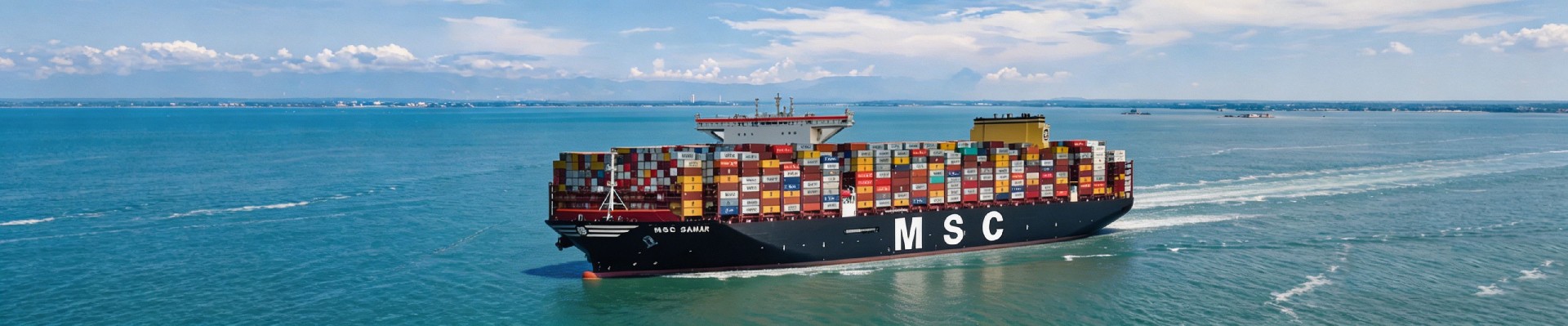
Lead: As sub-Saharan Africa's largest container gateway, South Africa's Port of Durban has seen congestion deteriorate sharply since late July: average anchorage waits at its core terminal reached 80 hours, time at berth hit 106 hours, as many as 28 vessels queued at anchor on a single day, and terminal throughput fell by about 24%. The logjam has spread from the seaside to the landside and even forced carriers to omit port calls and rework routings — while a fee dispute pitting transporters against shipping lines, the terminal operator and Transnet has erupted in parallel.
A Set of Staggering Numbers
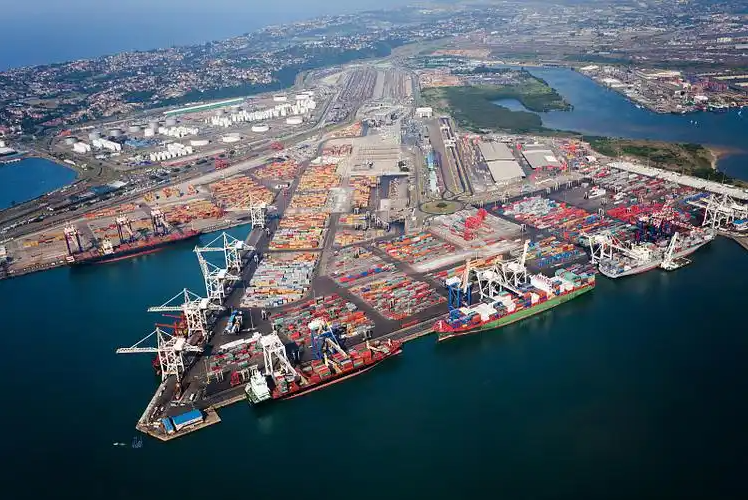
Durban handles about 60% of South Africa's container traffic and serves as the maritime lifeline for landlocked neighbors such as Zimbabwe, Zambia and Botswana. Since late July, the operational efficiency of this hub has deteriorated sharply.
According to the Southern African Association of Freight Forwarders (SAAFF), average anchorage time at the Durban Gateway Terminal (DGT, formerly Durban Container Terminal Pier 2) reached 80 hours in July, with average time at berth as high as 106 hours. Pier 1 came under similar pressure, with vessels spending 65 hours at anchor and 64 hours at berth. On July 31, 28 vessels were at anchor across the port. Weighed down by weak terminal productivity, DGT throughput fell by roughly 24% in late July.
Maersk's weekly port advisory of August 17 painted an even starker picture: vessel waiting times at DGT Pier 2 had reached 8 to 12 days, attributed directly to reduced port productivity and a shortage of straddle carriers — mechanical breakdowns and maintenance delays have left the terminal's internal container-moving system near a standstill. Seaexplorer data shows average waiting time of 3.25 days, average arrival delays of 4.17 days and departure delays as high as 4.93 days at Durban.
From Sea to Land, and Up to the Service-Rotation Level
The first wave of congestion hit at sea: vessels waited at anchor for berths while schedules fell apart. The second wave quickly reached the service-rotation level — Maersk and CMA CGM, co-operating on the Safari eastbound service, cancelled the next two calls at Port Louis, Mauritius, because vessels could no longer complete Durban operations within their scheduled windows while still protecting subsequent arrival dates at Tanjung Pelepas in Malaysia. Cargo loaded in Durban for Port Louis and the islands will be transshipped via Tanjung Pelepas, while Far East-bound cargo previously scheduled to load at Port Louis must be rearranged by destination port.
The landside is equally strained. Terminal gates and roads around the port are congested, with trucks queuing for hours — sometimes up to 12 — and Pier 1 landside operations under particular pressure. Worse, South Africa's main rail corridor is scheduled to shut down for maintenance from August 25 to September 2. With rail capacity shrinking before the port has cleared, container evacuation inland becomes even more dependent on road transport, and landside pressure is unlikely to ease in the near term. SAAFF has already warned that congestion will be difficult to resolve within weeks.
Fee Battle: 140 Transporters Take Carriers to the Competition Commission
Under the weight of congestion, the blame game has turned to money. According to Freight News, a group led by Positive Freight Solutions' (PFS) Container Division — representing around 140 transporters employing an estimated 6,000 people — filed a formal complaint with South Africa's Competition Commission in July, naming eight major shipping lines (MSC, Maersk South Africa, CMA CGM, Hapag-Lloyd, ONE, COSCO, PIL and Evergreen), as well as DGT and Transnet, as respondents.
The transporters' core allegation: the terminal and the carriers are "monetizing" avoidable delays — demurrage, detention and storage charges keep accumulating while containers remain trapped at the terminal for reasons beyond the hauliers' control. PFS data indicates that storage charges after free-time allowances expire can reach USD 140 (about R2,500) per container per day, compounded by separate demurrage and detention fees of USD 80 to USD 100 per container per day. Some carriers have also shortened free-time periods from five days to four. Transporters report that the truck-booking system is "fundamentally broken" — slots are nearly impossible to secure and sometimes vanish from the system, vehicles are turned away at the gate, yet storage charges keep clocking up automatically. Containers have remained trapped at the terminal for up to nine days.
MSC has disputed parts of the allegations, saying storage charges are imposed by DGT and that demurrage is not charged to trucking companies. But the fight over who should absorb the cost of congestion has clearly only just begun.
Why Durban Again
Durban's congestion is nothing new. For more than a decade, equipment breakdowns, labor disputes and underinvestment have plagued the port. International Container Terminal Services Inc. (ICTSI) took over DGT operations on January 1, 2026 under a 25-year concession in which Transnet retains a 51% stake — but the introduction of a standalone Navis N4 terminal operating system triggered integration chaos that became a key trigger of the current round of congestion.
Zoom out, and Durban's troubles carry a global dimension: with the Red Sea crisis now approaching 1,000 days and virtually all mainline services diverting around the Cape of Good Hope, South African ports have become critical nodes on the diversion route, absorbing far more calls and transshipment pressure than before the pandemic. With capacity waiting outside container ports worldwide already exceeding 4.3 million TEU — above the 2022 pandemic peak — Durban stands out as one of the most conspicuous choke points in the global congestion picture.
For China-Africa trade and shippers worldwide, the reality right now is: Durban's combination of port omissions, transshipment rerouting and rail outages will persist for weeks, and transit times for Durban-bound cargo need to be recalculated with week-level buffers. Monitoring carriers' port-omission notices before shipping and keeping alternative transshipment paths ready for cargo in transit matters more than ever.
Disclaimer: Data in this article is from public sources and is for industry analysis only. It does not constitute any decision-making advice; actual freight rates are subject to carriers' official quotations.