.png)


 英文
英文

In late August, the container shipping market sits at a delicate historical juncture: on one side, returning vessels are trickling back through the Suez Canal "ship by ship"; on the other, 1.5 million TEU of newbuild capacity is being delivered in concentrated batches in the second half of the year. The footsteps of capacity returning are clearly audible — yet the market's direction has never been harder to predict.
The Reopening Picture: From "Testing" to "Institutionalizing"
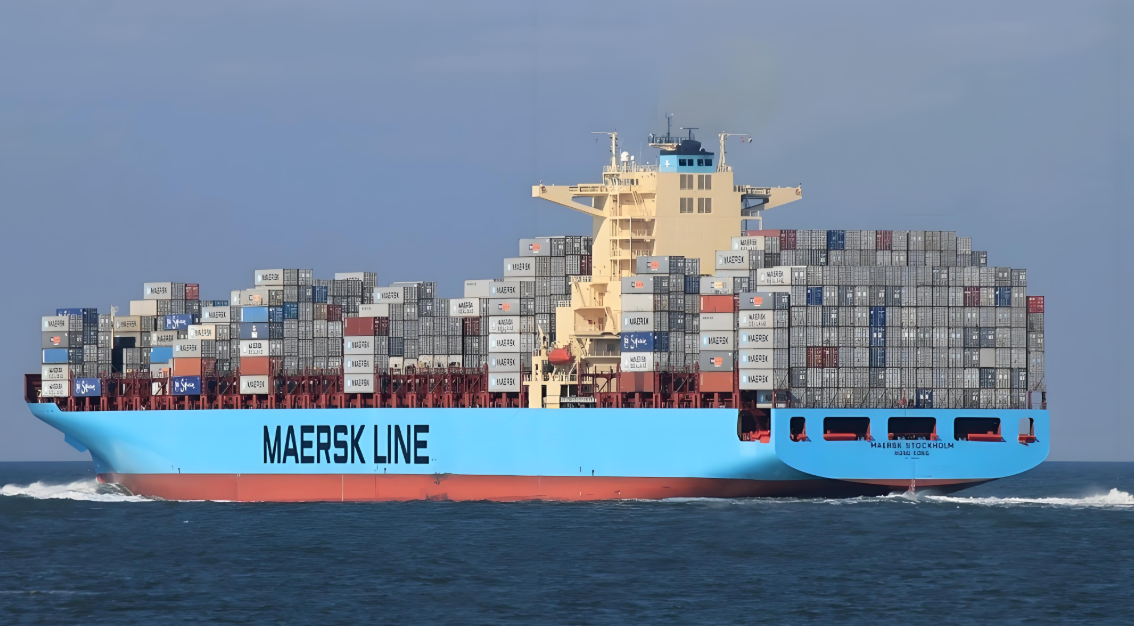
The return to the Red Sea is still led by the major carriers. In the final week of August, Maersk switched another service back to the Suez routing — the fourth of its services to return since early July, while nine of its Asia-Europe strings continue the long detour around the Cape of Good Hope. Almost simultaneously, one of CMA CGM's ultra-large vessels with capacity for 24,000 TEU completed its first southbound Suez transit since the crisis began, marking the first time a mega-ship has sailed the canal on the Asia-North West Europe mainline. CMA CGM has been the most committed player in this round of resumption, logging more than 100 canal transits in the first half of the year.
On August 25, MSC issued an operational notice announcing the partial restoration of Red Sea operations on selected East-West services — becoming yet another major carrier, after Maersk, CMA CGM and Hapag-Lloyd, to formally confirm its return.
The canal-side data confirms the "flow back": the Suez Canal Authority reports that since the start of 2026, 1,315 vessels carrying 56 million tons have transited the canal, generating USD 449 million in revenue, versus 1,243 vessels, 47 million tons and USD 368 million in the comparable 2025 period; fiscal 2025/26 revenue grew about 23% year on year to roughly USD 4.67 billion.
But it must be clearly understood: this is a "service-level" recovery, not a "network-level" return. No carrier has moved its entire network back to Suez. Every resumption is being rolled out "one service at a time," with the option to swing south again always kept open. War-risk premiums are still quoted per voyage, and the corridor remains on the listed war-risk zone — security and insurance are the "master switch" of any reopening.
The Other Return Stream: The Newbuild Delivery Wave
Running parallel to the Red Sea resumption is the batch delivery of newbuildings. In 2026, global deliveries are expected to reach about 1.5 million TEU, with nominal fleet growth of 3.7% — the lowest in three years — but the profile is "front-light, back-heavy": more than 60% of new tonnage is scheduled to be delivered between June and December. This means new capacity joins the market every month in the second half, compounding with the capacity released by resumed Suez transits.
The Cape of Good Hope detour still absorbs an estimated 10%–15% of global effective capacity. The longer route adds 10–14 days to a voyage, forcing carriers to deploy one or two extra vessels per weekly string. This "detour arithmetic" is the core reason freight rates stayed firm through 2026 even as demand remained lukewarm — the capacity did not disappear, it was simply "locked up" on longer routes. Once Suez is fully restored, that absorbed tonnage will flood back in a concentrated release; combined with newbuild deliveries, the supply-demand balance could tip quickly.
A Standoff Between Two Camps: Where Is the "Anchor" of Rates?
On the outlook for freight rates, the market has shown rare disagreement.
Maersk CEO Vincent Clerc holds the "landside bottleneck" view: in his assessment, the market is no longer constrained by vessel supply but by the carrying capacity of ports, terminals, trucking and rail. Roughly 1.85 million TEU of capacity (4.55% of monitored fleet) is currently waiting outside the 45 ports in the tracking indicator — while vessels queue, more new ships solve nothing. If Asian export demand stays strong, congestion could actually continue to support high rates.
The analyst camp pushes back directly. Xeneta's Chief Analyst Peter Sand argues that port congestion alone cannot support elevated rates over the long term — the Red Sea is the decisive variable. Lars Jensen of Vespucci Maritime goes further, calling today's port pressure "temporary rather than structural": once Red Sea routings normalize, the capacity absorbed by diversions will return in force, and together with the massive order book, the market could quickly slide back toward overcapacity. In the face of the newbuild order book — the "ballast stone" — today's high rates look less like a new long-term floor and more like a one-off disruption premium.
Four Variables Still Far From Settled
The landscape is "far from clear" because four variables remain in violent flux:
Pace of resumption — Maersk has explicitly said there is no full-return timetable, and both Hapag-Lloyd and Drewry stress this does not constitute a wholesale return signal. Restoring a single service takes a full quarter to re-cut schedules, terminal windows and feeder connections. Reopening is not a switch; it is a long repositioning.
Newbuild deliveries — 3.4 million, 3.7 million and 2.5 million TEU are slated for 2027, 2028 and 2029 respectively; supply pressure over the next three years will only intensify. The only counterweight is scrapping, but vessels aged over 20 years currently account for just 16% of the fleet — demolition is far too slow to offset deliveries.
Port congestion — Shanghai and Rotterdam have eased somewhat but still drag on network efficiency, while German port labor disruptions and congestion in Brazil and West Africa flare up in turn. Is the landside bottleneck a "new normal" or a temporary symptom after reopening? The two camps disagree.
Geopolitics and tariffs — the pace of Hormuz recovery remains unclear, and the Houthi threat in the Red Sea is not fully resolved. U.S. tariffs on China are set to keep fermenting ahead of the November midterm elections, with USTR investigations proposing additional duties of 10%–12.5% on certain economies. Policy risk can rewrite supply-demand math at any moment.
Advice for Shippers: Treat "Normalization" as an Upside Case, Not the Base Case
Until the landscape clears, the most dangerous move is betting on a single direction. Industry advice is remarkably consistent: do not sign a 12-month contract locking in a "normalization" assumption — once the dual release of resumption and newbuilds lands, rates could fall far faster than most expect; conversely, if geopolitical risk escalates again and diversions persist, high rates will last longer than expected. The right approach is to model "full reopening" as an upside scenario, embed flexible adjustment mechanisms in contracts, and watch two leading signals: whether weekly transit counts through Suez and Hormuz keep recovering, and whether war-risk premiums keep falling over several months. When capacity truly returns at scale, the rate decline will come fast and hard — shippers that have prepared alternatives and backup space channels in advance will be the ones holding the initiative through this round of realignment.
Capacity is coming back, but the direction is not yet clear. The container market in H2 2026 is destined to be a game played while watching and waiting.
Disclaimer: Data in this article is from public sources and is provided for industry analysis reference only. It does not constitute any decision-making advice; actual freight rates are subject to carriers' official quotations.