.png)


 英文
英文
Float balls are widely used in marine mooring, waterway warning, aquaculture, pipeline pigging, and liquid storage tank level control. We provide professional float ball transport services from manufa···

Float Ball
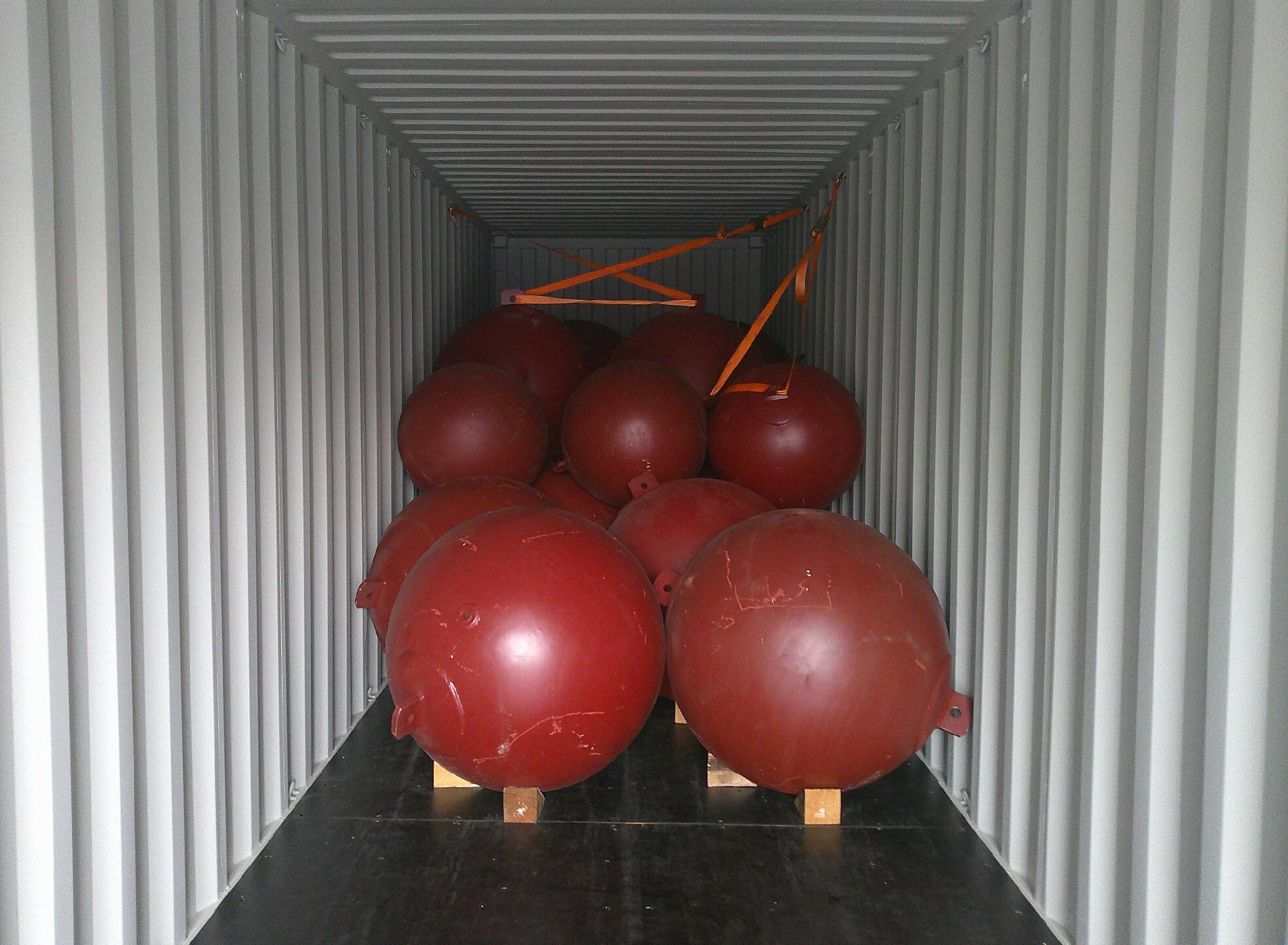

Float Ball Transport
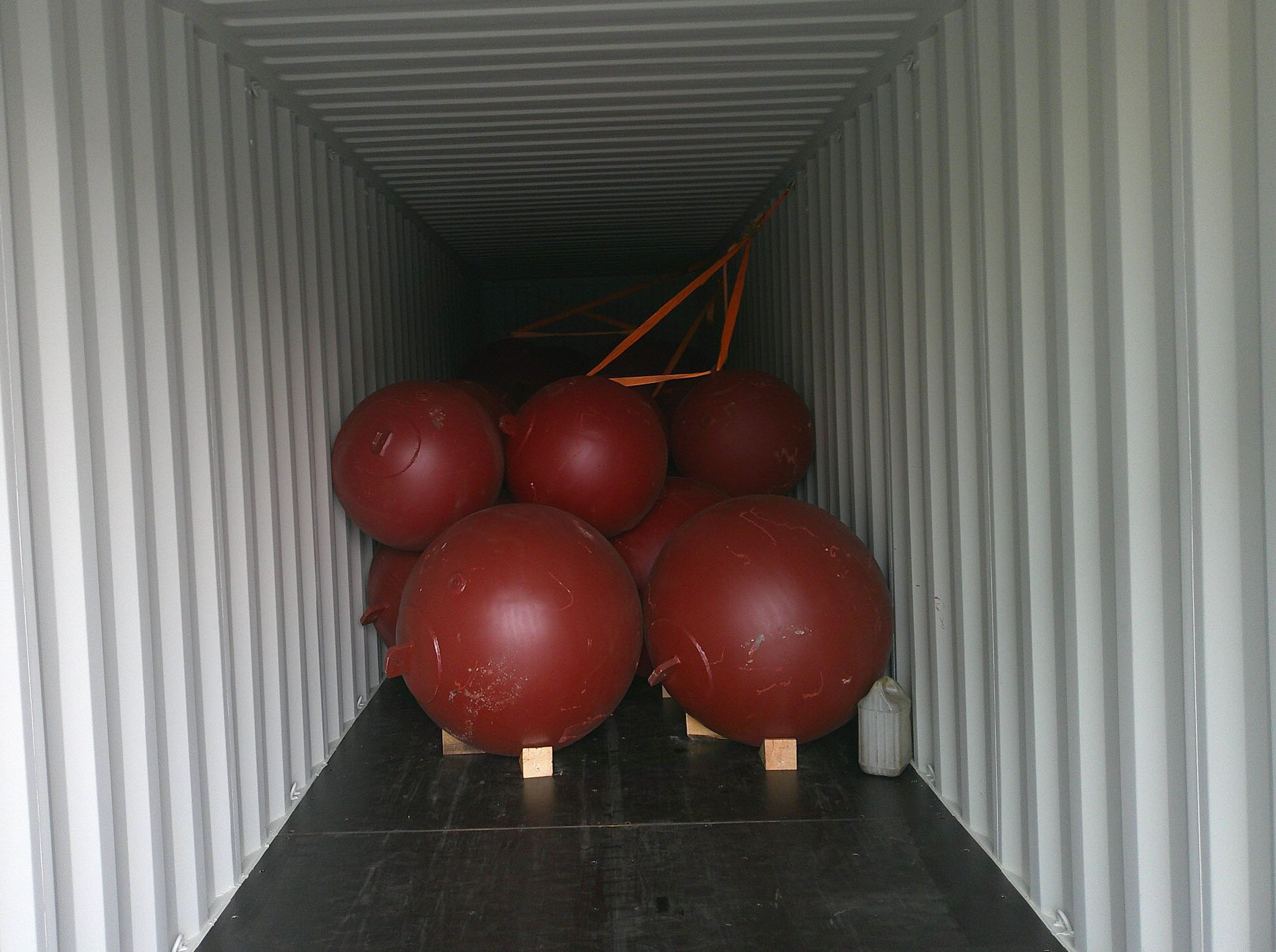
Float Ball Transport
服务详情
Float balls are widely used in marine mooring, waterway warning, aquaculture, pipeline pigging, and liquid storage tank level control. We provide professional float ball transport services from manufacturing plants and warehouses to domestic/overseas project sites. We offer single-unit or batch shipments, covering small plastic float balls to large steel mooring buoys.
Common Types
Mooring Buoys (for anchor positioning, terminal fendering)
Warning Buoys (waterway boundary, restricted area marking)
Rescue Buoys (water rescue equipment)
Pipeline Pigging Balls (for pipeline internal driving and cleaning)
Level Gauge Float Balls (for storage tanks, water tank level control)
Aquaculture Buoys (for net cage and enclosure farming)
Marine Monitoring Buoys (instrument carrying)
Key Transport Challenges
Spherical Structure Prone to Rolling: Float balls on a transport vehicle or inside a container are prone to rolling and shifting under force, especially during acceleration, braking, or turning. Without effective securing, they can collide with each other or the container walls.
Wide Variation in Single-Unit Weight: Small plastic float balls weigh less than 1 kg; large steel mooring buoys can weigh several tons. Loading methods and securing requirements differ significantly.
Surface Prone to Scratching or Damage: Plastic float balls have a thin shell and are easily deformed or ruptured by hard object compression. Painted buoy surfaces, if scratched, affect appearance and corrosion resistance.
Large Batch Quantities with Single Size: A single order often contains hundreds or thousands of float balls of the same size. Without interlayer protection and lashing, the bottom layer can be crushed.
Scattered Accessories: Float balls are often accompanied by mooring chains, shackles, anchor chains, lifting rings, and other accessories. If shipped separately, missing parts or incorrect matching may occur during on-site assembly.
Difficult to Determine Large Buoy Center of Gravity: Steel or concrete-counterweighted buoys may have an uneven internal structure, with the center of gravity not necessarily at the geometric center. Careful calculation is required during lifting.
Our Transport Solutions
Packaging & Securing
Small float balls (≤20kg per unit): Use high-strength woven bags or bulk bags with a fixed quantity per bag. Stack on pallets and wrap with stretch film. Place cardboard or foam between bags to prevent compression deformation.
Medium float balls (20-100kg per unit): Use wooden pallets + custom divider racks. Stack balls in layers with foam between layers. Secure each layer horizontally with straps to prevent rolling.
Large float balls (≥100kg per unit): Bare stowage or steel frame fixing. Lay V-shaped or curved wooden saddles on the flatbed or container floor. Place the ball in the saddle and secure on both sides with chains or ratchet straps to prevent rolling.
Surface Protection: For painted float balls, place rubber corner protectors or soft padding at contact points between straps and the ball to prevent paint damage. Wrap plastic float balls with bubble wrap or stretch film.
Cover protruding structures such as lifting rings and connection lugs with foam or rubber sleeves to prevent impact deformation.
Lifting & Handling
Small float balls (bagged or palletized) handled by forklift with padded forks to prevent piercing the packaging.
Large float balls: lift using built-in lifting rings or nylon slings for basket lifting. Prohibit hooking wire ropes directly onto the ball surface.
Use multi-point slings or a spreader beam for large balls to ensure smooth lifting without tilting or rolling.
Loading/unloading on a level surface. Pre-lay wooden sleepers or rubber pads under large float balls to prevent ground impact damage.
Transport Modes
Standard container: Suitable for medium or smaller float balls. Load pallets or wooden crates; secure gaps with air bags or wooden dunnage to prevent sliding.
Open-top container or flat rack container: Suitable for large float balls. Lift the ball into the container after fixing to a steel frame or saddle. Secure around the perimeter with straps.
Breakbulk vessel: Suitable for large quantities or ultra-large float balls. Stow in hold or on deck. Place wooden dunnage between balls; secure in rows as a whole.
Small float balls: Enclosed van or flatbed. Stack pallets neatly and secure with cross straps.
Large float balls: Low-bed flatbed with saddle support and chain lashing. Apply for oversize transport permit if over-width.
Road Transport:
Sea Freight:
Multimodal Transport: Road + sea + inland barge combination for door-to-door service.
Value-added Services
Assistance with shipping marks and packing lists, labeled by specification, color, and application for fast distribution at destination port.
Pre-shipment photos of float ball appearance, surface coating, lifting lugs, etc.
Accessories such as chains, shackles, and anchor chains for large float balls can be shipped together in the same batch for unified customs clearance and one-time handover.
Coordination of offloading at destination port and stacking at customer's designated area.
Our Advantages
Years of experience handling various float balls (from small plastic balls to multi-ton mooring buoys), mastering anti-rolling and anti-compression solutions for different weights and materials.
Layered stacking + interlayer padding + overall lashing for batch shipments, minimizing transport losses and maintaining a high intact rate upon arrival.
Large steel mooring buoys secured with V-shaped wooden saddles or custom steel frames and chain lashing, preventing shifting or rolling even under severe sea conditions.
Rubber corner protectors or soft padding at all strap contact points on the ball surface, preventing paint scratches and plastic indentations.
Accessories (mooring chains, shackles, etc.) shipped together with float balls for centralized management, avoiding installation delays due to separate arrivals.
Stable flat rack, open-top container, and breakbulk vessel slots on major global routes; flexible economic solutions based on batch size.