.png)


 英文
英文
The pressure vessel head is a closure component at both ends of pressure vessels, storage tanks, reaction kettles, boilers, and other equipment, designed to withstand internal pressure and ensure vess···

Pressure Vessel Head
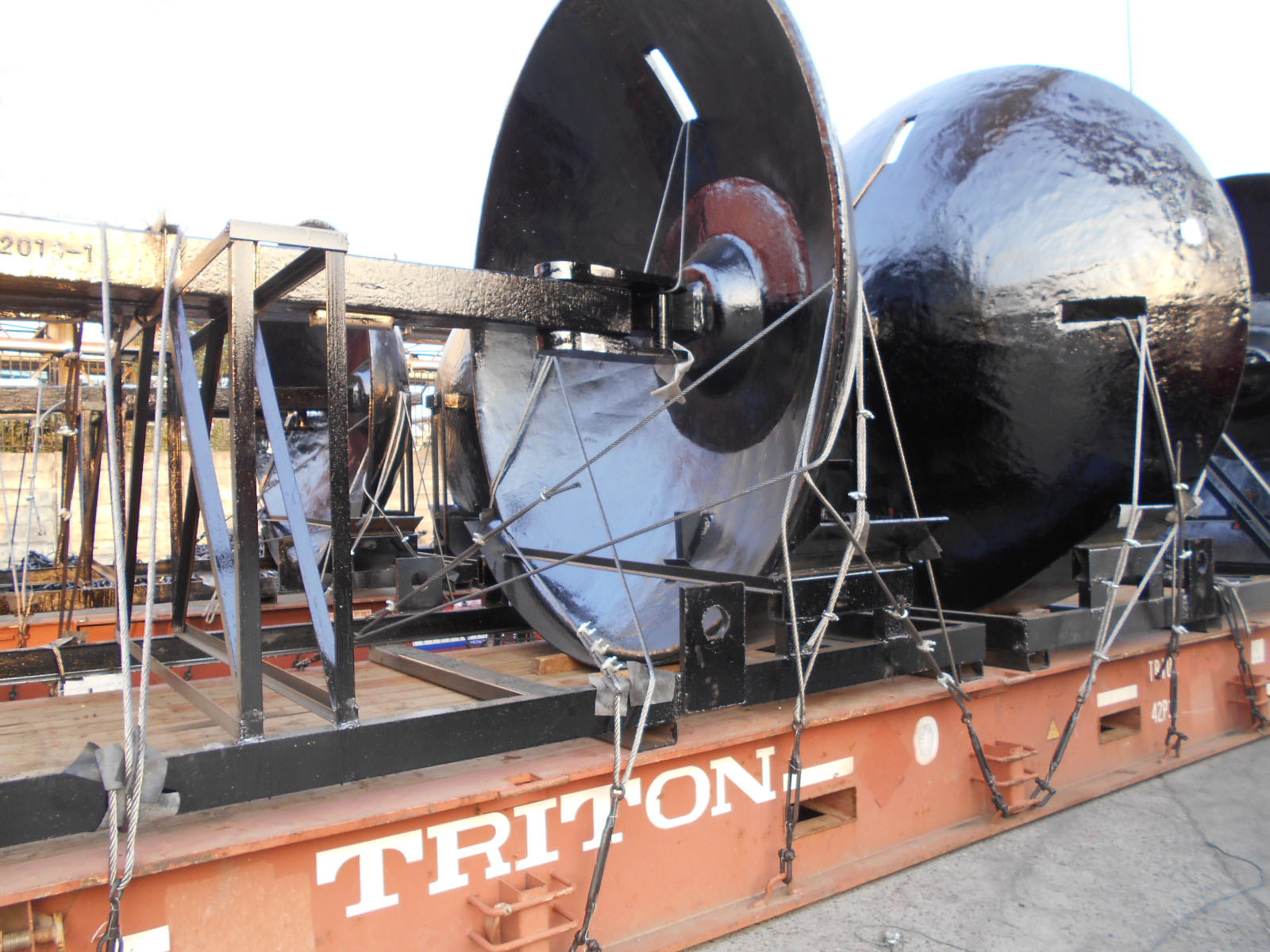

Pressure Vessel Head Transport
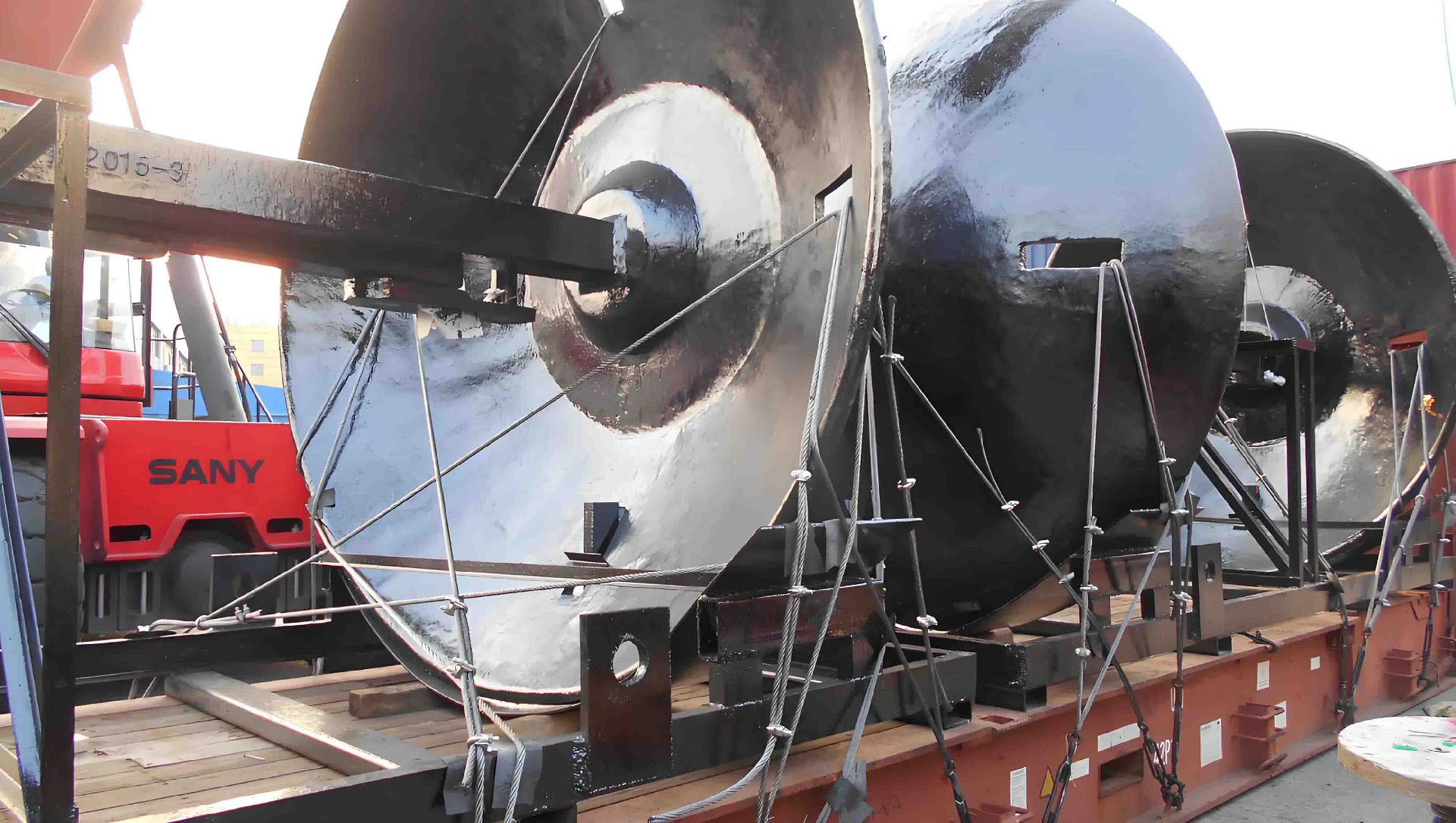
Pressure Vessel Head Transport
服务详情
The pressure vessel head is a closure component at both ends of pressure vessels, storage tanks, reaction kettles, boilers, and other equipment, designed to withstand internal pressure and ensure vessel sealing. We provide professional transport services from manufacturing plants to pressure vessel manufacturers or installation sites. We offer single-unit or batch shipments, covering pressure vessel heads of various specifications and sizes.
Common Types
Elliptical Head (Standard, Shallow)
Torispherical Head
Spherical Head
Conical Head (With or without knuckle)
Flat Bottom Head
Hemispherical Head
Custom-shaped Head (Non-standard design)
Key Transport Challenges
Curved or Spherical Shape Makes Stable Placement Difficult: The bottom of the head is curved, making it prone to rolling or tipping on flatbeds or container floors. This is especially prominent for elliptical and spherical heads.
Wide Variation in Single-Unit Weight: Small-diameter heads (DN300 or below) weigh only a few kilograms; large heads (DN5000 or above) can weigh several to over ten tons.
Oversized Dimensions Common: Large heads can have diameters of 3-6 meters or more, far exceeding standard container width, making them over-width cargo.
Edge Bevel Prone to Damage: The open end of the head is typically machined with a welding bevel. If directly impacted by hard objects or deformed under stress during transport, the bevel can be damaged, affecting subsequent welding quality.
Anti-corrosion Coating Prone to Scratching: The inner and outer surfaces are often coated with anti-rust paint or have a stainless steel pickling/passivation layer. Scratches from impact during transport can affect corrosion resistance.
High Stacking Difficulty for Large Batches: Multiple heads of the same specification are often stacked for transport. Without effective interlayer isolation and protection, the bottom heads are prone to compression deformation or bevel damage.
Poor Rigidity of Large-Diameter Thin-Walled Heads: Heads with large diameter but thin wall thickness are prone to oval deformation or local denting if improperly supported during transport.
Our Transport Solutions
Packaging & Securing
Single transport: Place the head with the open end down on the flatbed. Lay a wooden or rubber annular ring pad that matches the head opening edge. Secure around the head with chains or ratchet straps from four directions (sides, front, rear).
Can also be transported with the open end up, with lighter accessories stacked inside.
Small/medium heads (≤200kg per unit): Stack multiple heads of the same specification in layers, with annular rubber pads or thick cardboard between layers. Place the bottom head on a wooden pallet and secure the stack with strapping bands or stretch wrap. Stacking height typically not exceeding 1.5 times the head diameter.
Large heads (≥200kg per unit):
Ultra-large heads (diameter ≥3m): Use a custom steel frame. Bolt the steel frame to the head flange or opening edge. Weld or strap the steel frame to the vehicle deck.
Bevel protection: Install metal or plastic protective rings at the opening edge bevel and wrap with rubber strips.
Surface protection: Cover stainless steel heads with protective film or bubble wrap. Apply anti-rust paint on carbon steel heads; wrap the surface with stretch film; add corner protectors at critical areas.
Protect attachments such as nozzles and flanges with foam or wooden protective covers.
Lifting & Handling
Small heads (palletized): Use forklift with padded forks to prevent piercing the packaging.
Large heads: Lift using the head opening edge or built-in lifting lugs. Use nylon slings or dedicated lifting beams. Prohibit hooking wire ropes directly onto the head bevel edge.
Use multi-point slings during lifting to ensure the head remains horizontal, avoiding edge deformation from tilting.
Loading/unloading on a level surface. Pre-lay wooden sleepers or rubber pads under the head.
Transport Modes
Standard container: Suitable for small-diameter heads (≤2.3m). Stack heads on pallets, secure, and load into container. Fill surrounding gaps with air bags or wooden dunnage.
Open-top container or flat rack container: Suitable for heads with diameter 2.3-4m. Place the head with the open end down on the container floor. Secure around the perimeter with straps.
Breakbulk vessel: Suitable for ultra-large heads or batch shipments. Stow on deck or in holds. Place wooden dunnage between heads and secure as a whole.
Small/medium heads: Enclosed van or flatbed. Stack pallets neatly and secure with cross straps.
Large and ultra-large heads: Low-bed hydraulic modular trailer. Place the head with the open end down, supported by an annular ring pad. Secure with straps. Apply for oversize transport permit in advance for over-width heads; plan the route.
Road Transport:
Sea Freight:
Multimodal Transport: Road + sea combination for door-to-door service from factory to destination port or manufacturer.
Value-added Services
Assistance with shipping marks and packing lists, labeled by specification, material, and heat number.
Pre-shipment photos of head inner/outer surface, bevel, and flange face to document initial condition.
Anti-rust treatment: apply anti-rust oil on exposed carbon steel surfaces.
Coordination of crane offloading at destination port/site and placement at customer's designated location.
Our Advantages
Years of experience handling various pressure vessel heads; familiar with support and securing requirements for elliptical, torispherical, spherical, and other head shapes.
All head bevels fitted with protective rings and wrapped with rubber before shipment, preventing bevel damage that would affect welding quality.
Thin-walled large-diameter heads supported by custom annular ring pads or steel frames, preventing oval deformation or local denting during transport.
Stacking height strictly controlled for batch shipments of same-specification heads. Cushioning material between layers; bottom head edge and bevel remain free of pressure.
Stainless steel heads surface-protected with film; carbon steel heads properly rust-proofed. Arrival surface condition meets customer acceptance requirements.
Heads can be shipped together with companion skirt supports, flanges, nozzles, and other accessories in a single batch for unified handover, reducing client coordination costs for multiple receipts.
Over-width heads: oversize transport permits processed in advance with route planning, ensuring legal and compliant passage.